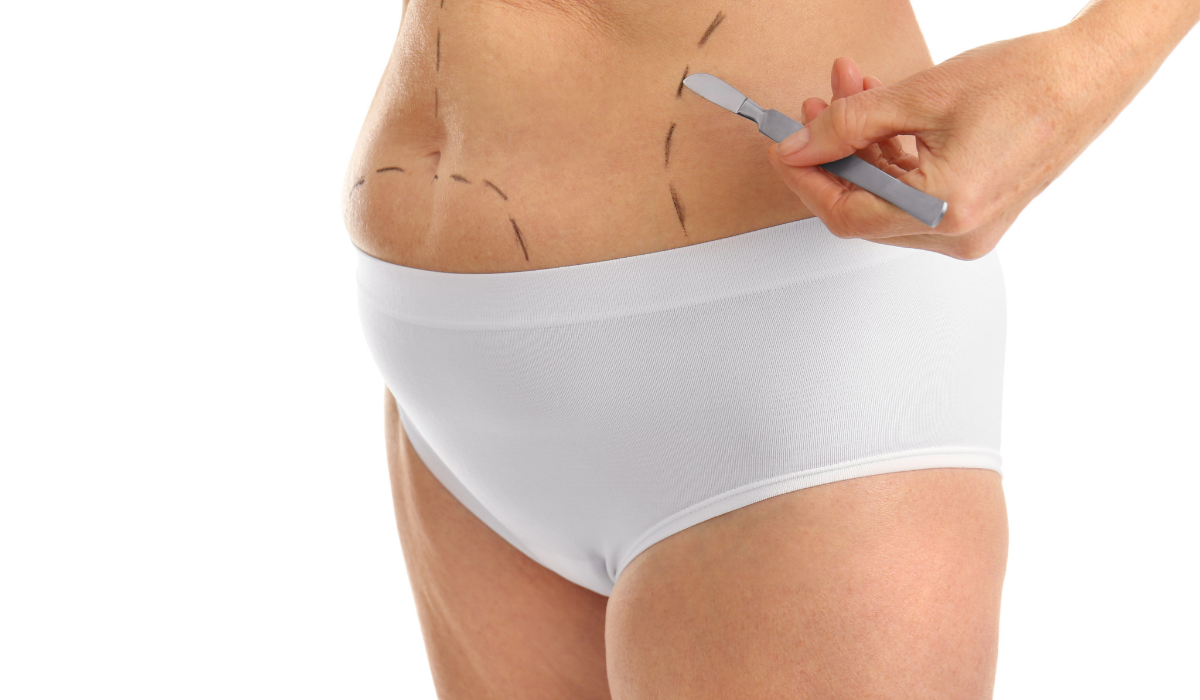
A good figure not only looks attractive but also gives you confidence. It can be easily achieved by following a healthy lifestyle. However, there are some areas of the human body that are resistant to exercise and dieting — no matter how hard you try. Liposuction and tummy tucks are aimed at targeting these areas. But faced with a decision between two seemingly similar options (liposuction vs. tummy tuck), deciding on the right one for you can be difficult. Fear not! With this guide, we explain the main differences between liposuction vs. tummy tuck and give you a clear understanding of which is an appropriate procedure for you.
Understanding Your Concerns
The first step is taking control and identifying your specific aesthetic concerns. Here’s a breakdown of what each procedure addresses:
- Liposuction: This procedure addresses areas of localized fat that are not easy to burn through diet & exercise, such as the abdomen, flanks, thighs, or arms. It is most suitable for individuals with good skin elasticity and minimal loose or excess skin.
- Tummy Tuck (Abdominoplasty): Tightens loose skin and abdominal muscles separated by pregnancy, significant weight loss, or aging. It can also help remove excess skin and stretch marks in the lower abdomen.
Liposuction: Sculpting Your Silhouette
Liposuction (lipoplasty or suction-assisted lipectomy) is a cosmetic surgery that aims to eliminate specific areas of fat deposits in the body. In it a thin tube (a cannula) is inserted beneath the skin to dislodge fat cells, which are subsequently removed using a suction device. Depending on the scope of the treatment and the patient’s preference, liposuction can be carried out under general anesthesia, twilight anesthesia, or local anesthesia.
Detailed Procedure:
During liposuction, small incisions are made in the target area. A tumescent solution, which contains saline, lidocaine, and epinephrine, is injected to minimize bleeding and discomfort. The cannula is then inserted through the incisions to break up the excess fat and suction out those fat cells. The procedure can be long or short, depending on the size of the treatment area. Here are some key points to consider:
Key Points:
- Target Areas: Abdomen, thighs, hips, buttocks, arms, neck, and back.
- Primary Goal: Remove isolated pockets of fat that are resistant to traditional weight-loss methods.
- Recovery Time: Relatively short, with most patients returning to normal activities within a few days to a week.
- Ideal Candidates: Individuals with good skin elasticity and localized fat deposits.
Benefits:
- Minimally Invasive Procedure: Liposuction is a less invasive surgical procedure requiring smaller incisions than other surgeries.
- Fast Recovery: Patients can typically return to normal activities within a few days to a week after the procedure.
- Targeted Fat Elimination: Liposuction effectively eliminates persistent fat deposits that won’t go away with traditional diet and exercise methods.
- It can be combined with other procedures like liposculpture for a more sculpted look.
Considerations:
- Not a weight loss solution.
- It is best for patients with good skin elasticity.
- It may not address loose skin or separated abdominal muscles.
- Multiple areas may require multiple procedures.
Tummy Tuck: Redefining Your Midsection
A tummy tuck (abdominoplasty) is a surgical procedure designed to trim or remove sagging skin and unwanted fat from the abdomen and tighten weakened or separated abdominal muscles. A tummy tuck is particularly popular among individuals who have experienced significant weight loss due to pregnancy or some illness, as these events can lead to lose or sagging skin and stretched abdominal muscles.
Detailed Procedure:
A tummy tuck involves a horizontal incision between the pubic hairline and the navel. The length of the incision depends on the amount of excess skin. Through this incision, weakened abdominal muscles are repaired and stitched closely, and excess skin and fat are removed. In some cases, a second incision around the navel is needed to remove any excess skin in the upper abdomen. The procedure typically takes two to five hours and is performed under general anesthesia. Here’s a closer look:
Key Points:
- Target Areas: Primarily the abdomen.
- Primary Goal: Remove excess skin and fat and tighten abdominal muscles.
- Recovery Time: Longer than liposuction, with most patients needing several weeks to fully recover.
- Ideal Candidates: It is ideal for people with loose or sagging skin & weakened abdominal muscles, often due to pregnancy or significant weight loss.
Benefits:
- Comprehensive Results: A tummy tuck gives excellent results in removing excess skin unwanted fat and tightening abdominal muscles; the result is a flatter, more toned abdomen.
- Long-Lasting: Results are generally long-lasting, especially if the patient maintains a stable weight & healthy lifestyle.
- Improved Posture: By tightening the abdominal muscles, a tummy tuck can also improve posture & alleviate back pain caused by muscle weakness.
Considerations:
- More invasive surgery with a longer recovery time.
- This procedure requires general anesthesia.
- Leaves a scar, though often placed low on the bikini line for discretion.
- It might not be suitable for those planning future pregnancies.

Liposuction vs. Tummy Tuck: Making the Right Decision
Here’s a helpful guide to assist in making the right decision:
Liposuction may be a suitable choice if:
- You have persistent fat deposits that are unresponsive to diet and exercise.
- Your skin exhibits good elasticity and minimal sagging.
- You wish to achieve the best results with a minimally invasive procedure and a shorter recovery period.
On the other hand, a tummy tuck could be more appropriate if:
- Your skin is loose and saggy in your abdominal area.
- Your abdominal muscles are separated due to pregnancy or weight loss.
- You desire a more dramatic improvement in your midsection appearance.
- You’re (ideally) finished with childbearing.
Consultation is Key
The most effective method for finding the right procedure for you is to seek advice from a board-certified plastic surgeon. They will evaluate your unique anatomy (no two humans are the same), objectives, and medical background to suggest the most appropriate choice. During the consultation, be prepared to discuss:
- Your desired cosmetic outcome.
- Your medical history and any past surgeries.
- Medications you’re currently taking.
- Realistic expectations for results and recovery.
Recovery and Follow-up
Both procedures require a period of recovery. Liposuction usually involves less downtime, with patients returning to normal activities within a few days to a week. However, a tummy tuck requires a more extended recovery period, often several weeks. Following your surgeon’s post-operative instructions is crucial for optimal healing and desired results.
Safety Considerations
Liposuction and tummy tuck surgeries are generally safe when performed by a qualified and experienced plastic surgeon. However, like with any surgical operation, there are some dangers to consider. During your consultation, you should have a thorough discussion with your surgeon regarding these risks. Infection, severe bleeding, scarring, or results that are asymmetrical are all possible consequences of these treatments.
The Takeaway
Liposuction and tummy tucks are effective tools for achieving a flatter, more toned stomach. However, they address different aesthetic concerns. By understanding the key differences and consulting with a board-certified plastic surgeon, you can make a favorable decision about which procedure is right for you to achieve your desired results.